
Here’s a rather windy video overlooking the caldera at Santorini, filmed in October 2025. Then lots of text with more fascinating info. And some pics.
A caldera, as I attempt to explain in the video, is a large opening formed by the eruption of a volcano. At Santorini it forms a rather magnificent harbor. Recent evidence shows that the caldera was already present before the time of the last major eruption of the volcano, around 1600 BCE. The precise date of the eruptions is one of the most contested facts about the Greek Bronze Age, in large part because scientific dating methods (including radiocarbon dating and tree-ring analysis) tend to point to a different date than that assigned by more traditional archaeological methods (through dates of pottery that can be assigned dates thanks to our knowledge of similar items found in Egyptian, where we have much more evidence for chronology). Archaeology appears to support a date of around 1550, while some scientific techniques suggest a date as early as 1650 BCE. What is certain is that this was a major eruption, one that led to significant tsunamis and accumulation of ash on Crete.
Why does this matter? One reason: Atlantis! More about that below. To get there we have to think more about the decline of the Minoan civilization, which suffered something like a collapse around 1450 BCE. The closer we can bring the date of the eruption to this date, the more impact we would assign to the volcano. Around 1450 most of the Minoan “palaces”—large complex structures that featured economic, political, and religious functions—were destroyed. The palace at Knossos continued in use, but was now occupied by Greeks from the mainland. The cause of the Minoan decline is unclear. Perhaps the Greeks from the mainland conquered the island and ruled from a single location. But the Greeks may have benefitted from a power vacuum caused by other factors. Perhaps there were internal social problems on Crete; perhaps other natural causes led to decline (climate change or local earthquakes are both candidates). But perhaps the volcanic eruption and tsunamis it caused did enough damage to doom the Minoans, even if they managed to survive it for several generations.
If the Minoans were doomed by a tidal wave from Thera, the argument goes, there could be some deep folk memory of that catastrophe that is reflected in some way in the Atlantis myth. Certainly those behind the cheesy LOST ATLANTIS “museum” on Santorini would like to believe that.
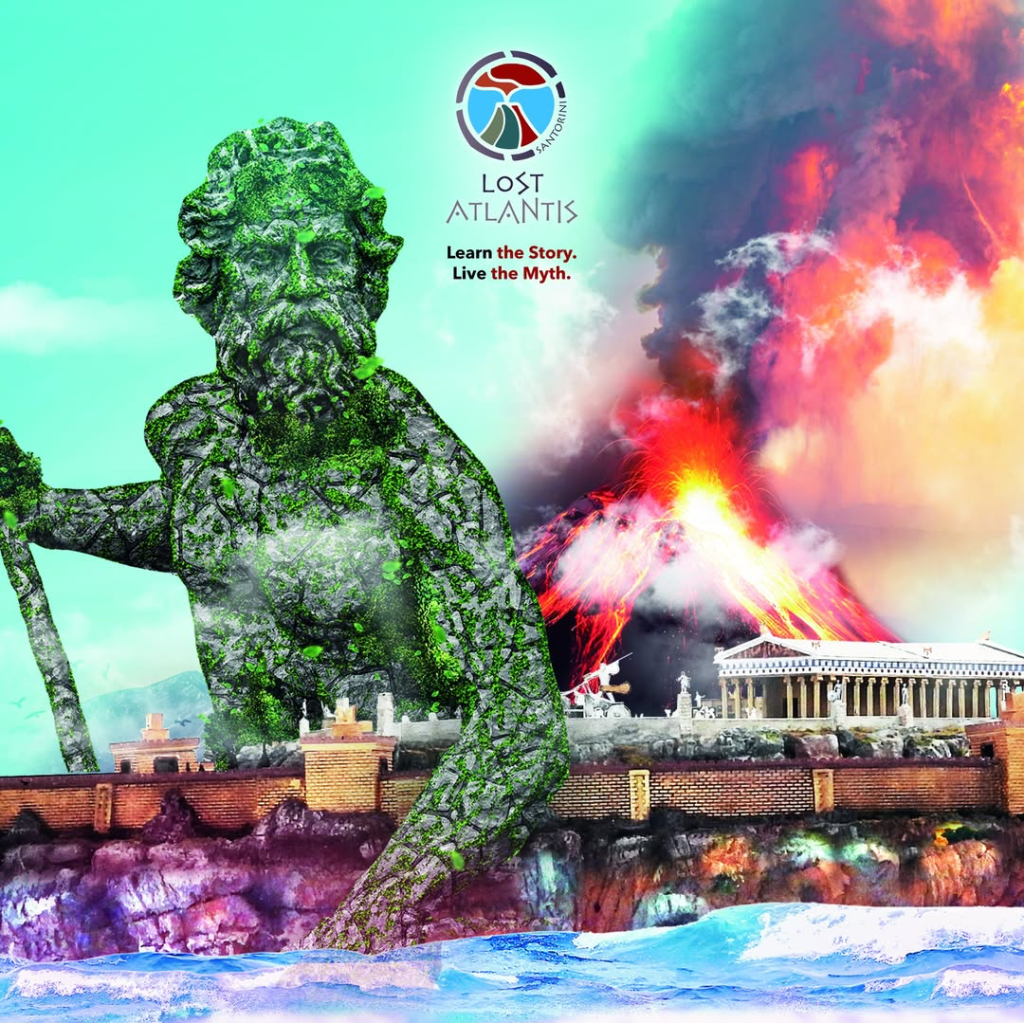
Should we? I’ll leave this as a teast just now, but the short answer is: almost certainly not.
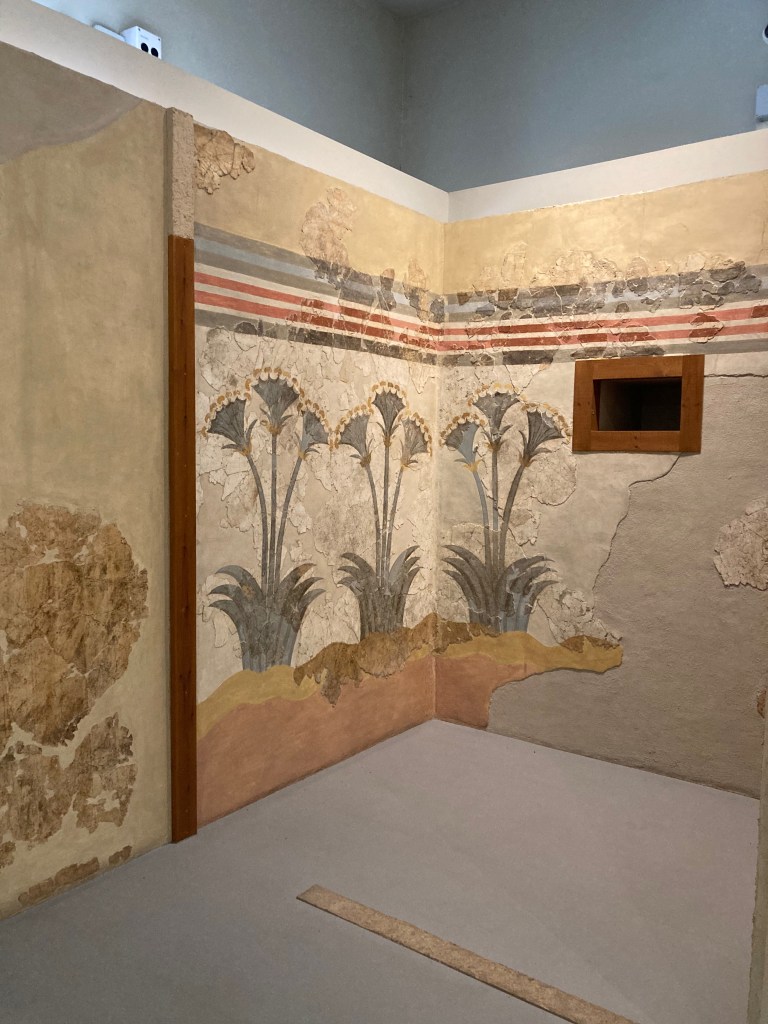
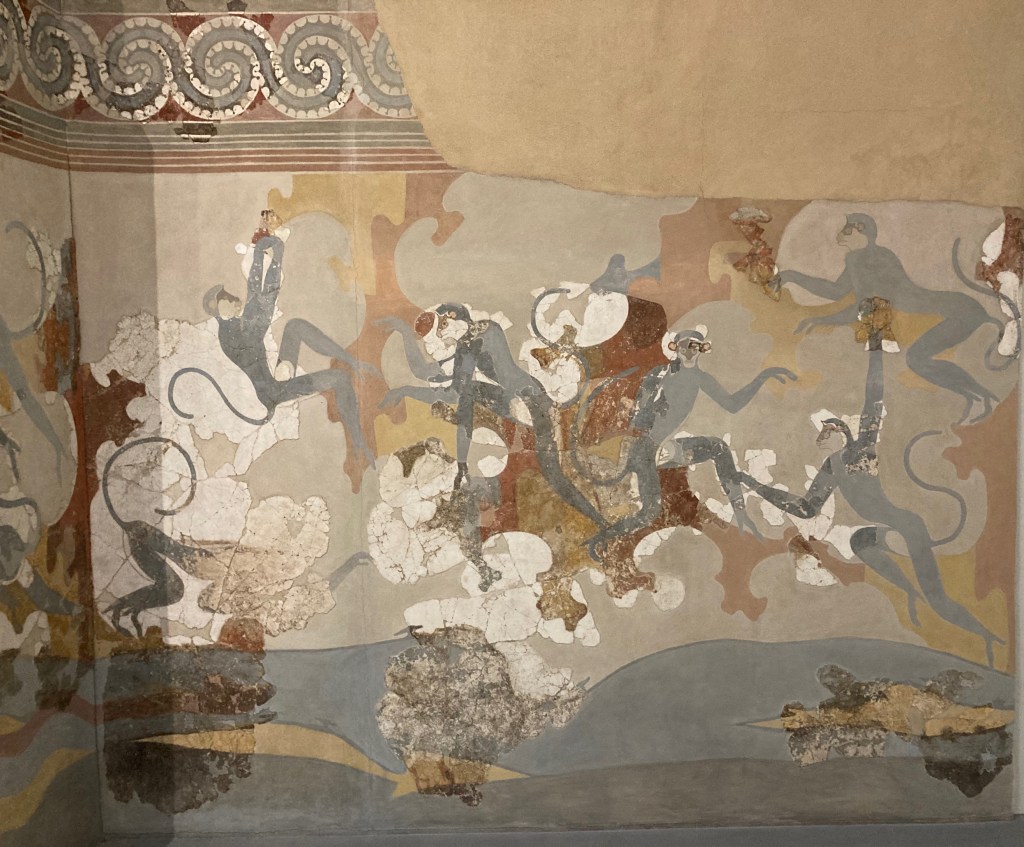
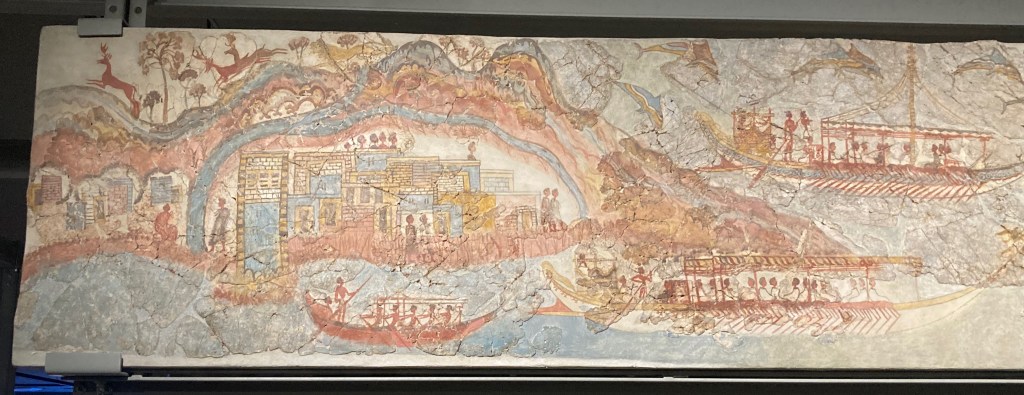
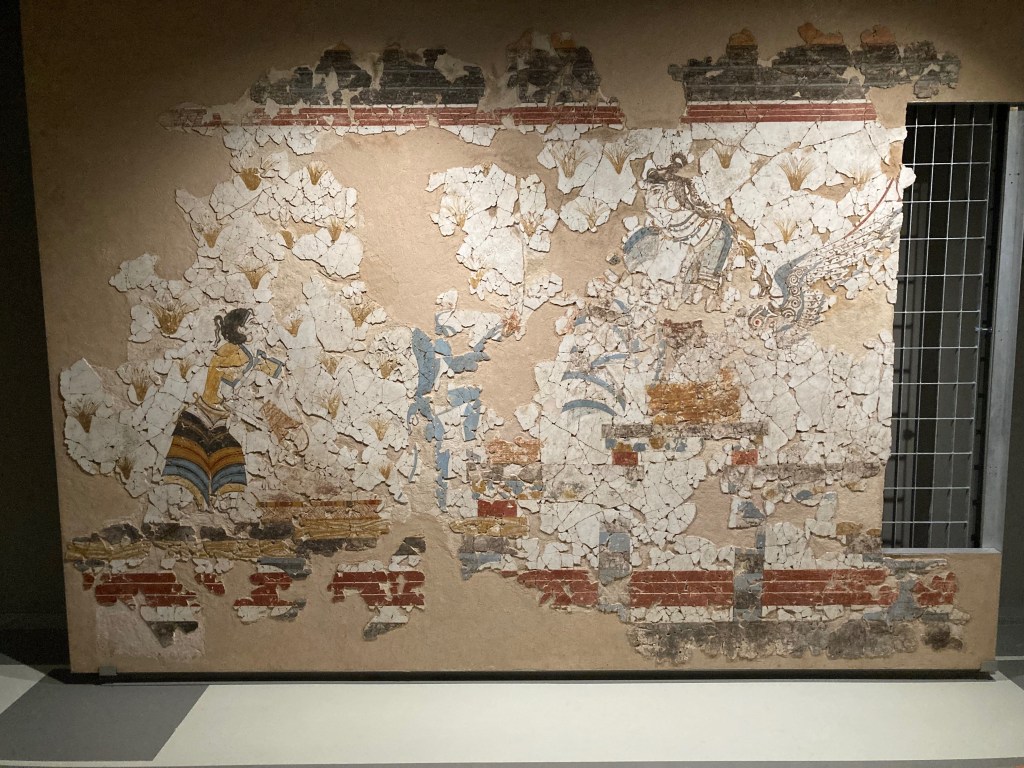
Below are some photos from my visit to the Museum of Prehistoric Thera. They may give you some sense of the rich wall paintings left behind after the settlement at Akrotiri that certainly was destroyed by the volcanic eruption around 1600.
Several of the images involve saffron, which comes from part of the crocus flower; it remains the most expensive spice in the world today. In antiquity it was also used to dye clothing and for various medicial purposes. The interpretation of the scene labelled “offering saffron to a goddess” is debated. The seated figure is identified as a goddess due to the presence of a griffin (a mythological beast) beside her, and the fact that a monkey is also offering her saffron. Here’s a more heavily reconstructed version of that image.
 David M. Johnson